The Israelites Grumble as They Have No Food (16:1-3)
A month after leaving Egypt, the people of Israel were wandering in the wilderness of Sin and complaining they didn’t have any food. The prophet and the politician are no longer popular.
They told Moses they would rather go back to Egypt where they at least had enough bread to eat. They have a nostalgia for the tyranny already. The fleshpots are the meat or fish they ate in Egypt. There is a repetition of their complaining as they constantly complain when the next thing seems to go wrong. It is the opposite to the hardness of Pharaoh’s heart. They have slavish habits at this point. The will of Pharaoh meant they were fed. There are ten plagues, ten commandments and ten complaints! God needs to shake out the internal tyranny and get Egypt out of them. The cycle of disobedience is running through the entire book. Pharoah had been stubborn and disobedient throughout the 10 plagues and the Israelites are no different. They are in the desert (chaos) rather than a place of order. They have their freedom but desire the order of the tyranny. Some order is required and coming because freedom is not complete anarchy – it requires structure. You can have all order and no freedom which is Pharoah. You can have all freedom and no order which is anarchy (desert). What is coming ii ordered freedom within the Covenant.
The wilderness is outside of the cities. It is hard to get to a place of quiet when you can hear the voice of God, divine revelation, or your own conscience. There is a technological tyranny with our technology that are designed to constantly grab our attention. It is hard to go to the desert and when there but can be the place of revelation. The default of the human nature doesn’t yearn to free, it years to be taken care of.
God Gives Bread from Heaven (16:4-36)
Moses warned the people that their complaining wasn’t against him and Aaron, but against God.
God’s glory appeared in the pillar of cloud, and He told Moses He had heard the grumbling of the people and would send them meat at twilight and bread in the morning.
That evening, God sent quail into the camp. In the morning, when the dew evaporated, a small, fine, flake-like bread appeared on the ground. It was unlike any bread the people had ever seen. God instructed each family to gather enough bread to eat for one day, no more and no less. The bread is like coriander seed and is their daily bread. They start with a seed and end the day with a body/flesh (quail). The seed is potential for the day and the body what is evaluated at the end of the day. This yet again another miracle and will be repeated every day apart from the Sabbath for forty years!
Some people tried to gather more but it spoiled overnight and bred worms. They were faithless. The only day they were told to gather extra was on the 6th day of the week, because God set the 7th day apart as a special day of rest. The 7th day of the week was the Sabbath day. The people still must go gather their food. They could not store it up. There would be none on the Sabbath, but they still had sustenance and they could enjoy a day of rest. The Ten Commandments have not yet been given but the principle of resting on the Sabbath is being carried out. Later the command will be for the nation with an ordered freedom that is to be throughout the land.
The people called the mysterious bread “manna.” The word “manna” is a transliteration of two Hebrew words meaning, “What is it?”. The text says. “It was like coriander seed, white, and the taste of it was like wafers made with honey.” The manna met only a temporal need of the body for a short period. Jesus would refer back to the manna from heaven in John 6:31-35 and that He was the “True Bread from Heaven” and that those who ate of it would never hunger.
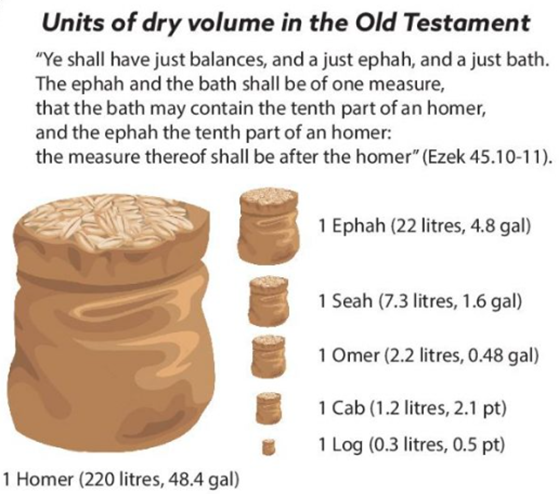
God told Moses to preserve a small amount (“Omer” – Exodus 16:33-34) of the manna in a jar as a memorial of how God fed the Hebrews in the wilderness. This will end up in the Ark in the Holiest of Holies. It is interesting that quail is not kept.
The Hebrews ate the manna for the 40 years they were in the wilderness. It must have been a challenge to eat manna for 40 years (Exodus 16:25-36). The Rabbis have traditionally taught that the manna tasted whatever you wanted it to taste like to overcome the monotony of eating the same thing every day!
It was hunger that caused the unbelieving Israelites to complain and wish to return to the slavery of Egypt. However, it was the hunger of the Prodigal Son that caused him to repent and come home (Luke 15:17). If you humble yourself and stoop to pick up the manna (ground or the Word) that God provides freely and lavishly every day.
Categories: Exodus
 Feed My Sheep
Leave a Reply!